
;)
Education news and commentary, delivered right to your inbox.
Sign up for The 74 newsletter.
This site is protected by reCAPTCHA and the Google and apply.
Updated Nov. 9
A high school girl who refuses to follow school rules is body-slammed to the ground, pulled out of her chair, and flung past rows of desks. The school resource officer’s use of force, caught on video, unleashes national outrage and costs him his job.
A 9-year-old girl with ADHD who screams and disrupts class finds herself confined to the back of a police cruiser for more than an hour until her mom gets home.
An 8-year-old boy is cuffed above the elbows as a cell phone captures the scuffle. “You can do what we ask you to or you can suffer the consequences,” the school resource officer says to the boy in a video that prompted a lawsuit over his use of restraint.
In Irving, Texas, a boy who shows a clock to his science teacher, proud of his ingenuity, finds himself in handcuffs — accused of building a “hoax bomb.” In Round Rock, Texas, an SRO called to stop a gym fight chokes a 14-year-old boy to the floor.
There are about 19,000 sworn police officers stationed in schools nationwide, according to U.S. Department of Justice estimates, and stories about their school discipline disasters cross Mo Canady’s desk all the time.
“The first thing I do is search our database to see ‘Did this person come through our training?’” said Canady, executive director of the National Association of School Resource Officers, which offers specialized training to SROs — primarily on a voluntary basis. “And the answer is consistently ‘no.’”
These incidents, youth rights activists and federal officials argue, show that the school resource officers lacked the proper training needed to interact effectively with children, especially when they are black, Hispanic, or disabled. Police officers’ encounters with students in the hallways are being increasingly scrutinized in the same way that their exchanges with adult civilians in the larger community are, for bias and alleged brutality.
Sometimes what happens in the streets is mirrored in the schools. A U.S. Department of Justice report found “police action that is unreasonable for a school environment” among SROs in Ferguson, Missouri. The probe followed the fatal police shooting of 18-year-old Michael Brown, whose death sparked months of protests and the Black Lives Matter movement. Overall, the Ferguson Police Department’s disproportionate number of arrests and its use of force stemmed from “unlawful bias” against black residents, according to the DOJ report.
Attempts to crack down on school violence have come at the expense of students of color and those with disabilities, who are disproportionately punished — including through restraint and arrest, U.S. Department of Education data show.
Too often, they’re being funneled into the school-to-prison pipeline, say advocates concerned that disadvantaged students are systematically pushed from classrooms to courtrooms.
For example, black students were 16 percent of the total student enrollment in the 2011-12 school year but 27 percent of students referred to law enforcement and 31 percent of students involved in a school-related arrest, .
Students with disabilities represented about 12 percent of the total student population but accounted for a quarter of those arrested and referred to law enforcement, 75 percent of those who were physically restrained at school and 58 percent of those placed in seclusion or involuntary confinement.
A range of factors may cause variations in student discipline rates, but racial disparities are not caused by more misbehavior, but because “racial discrimination in school discipline is a real problem.”
High-profile cases elicit outrage
Last year, residents in Columbia, South Carolina, came to Lisa Thurau, founder and executive director of Strategies for Youth, a school resource officer training program, with their concerns about the Richland County Sheriff’s Department, the same department whose deputy was caught on video last week violently handling the teenage girl who refused to leave her classroom at Spring Valley High School or put away her cell phone.
Community members had heard horror stories about officers’ use of force, arrests, and suspensions in their schools, Thurau said. They asked for her help.
Strategies for Youth gave the residents a set of training recommendations, which they delivered to the sheriff’s department. Recommendations included the nonprofit organization’s five-day train-the-trainer program, which uses a police training coach and a psychologist to teach officers how to train their co-workers. They also recommended a second, three-day session.
The training would have cost the department $75,000, according to the proposal. Thurau said she provided a list of organizations that could help pay for the program but communication between the community members and the sheriff’s department fell flat.
“We encounter this in a lot of places. There is no money,” she said. “We’re increasing the demands on police and doing nothing to support or equip them to be first responders to youth and families’ needs.”
The conduct of Deputy Ben Fields, the Spring Valley High School SRO, has sparked national outrage and prompted a criminal civil rights probe by the Federal Bureau of Investigations and the Justice Department.
Fields “did not follow proper training, did not follow proper procedure when he threw the student across the room,” Richland County Sheriff Leon Lott said at a news conference on Wednesday to announce Fields had been fired.
In this incident, school officials made the first mistake when they called on a police officer to address a school discipline incident, said Dennis Parker, director of the ACLU Racial Justice Program. But once the officer was there, he should have known how to de-escalate the situation without the use of force.
“It would be good to have clear training requirements for all schools and a clear understanding of what the role of school resource officers in schools should be,” Parker said. “I think that should be part of an agreement that is entered into between the school resource officers and the school district.”
Under South Carolina law, police officers must complete basic training as provided or recognized by the National Association of School Resource Officers or the South Carolina Criminal Justice Academy before they’re placed in schools.
But Canady, the NASRO executive director, said SROs in South Carolina, including Fields, don’t take his training because his program wasn’t approved by a state regulatory commission that certifies SRO training programs in the state.
According to the Strategies for Youth survey, the state police academy gives recruits 3.5 hours of training on juvenile justice issues. This does not include training on youth development and psychology, demographic issues, or cultural influences.
Blurred lines
On Oct. 8, two school resource officers were called to a central Texas high school when a school administrator was unable to de-escalate a fight between two boys in the cafeteria. Two Round Rock Police Department SROs responded to break up the fight at Round Rock High School, separating the students, according to a news release from the police department.
One of the boys, identified as 14-year-old Gyasi Hughes, refused to calm down and attempted to get past the officers to continue fighting, according to the department.
“After repeated attempts to calm the non-compliant student, and stop him from going after the other student,” according to the release, “officers were forced to detain him for his safety and the safety of others.”
Video footage from the incident appears to show the officer choking the boy and slamming him to the ground.
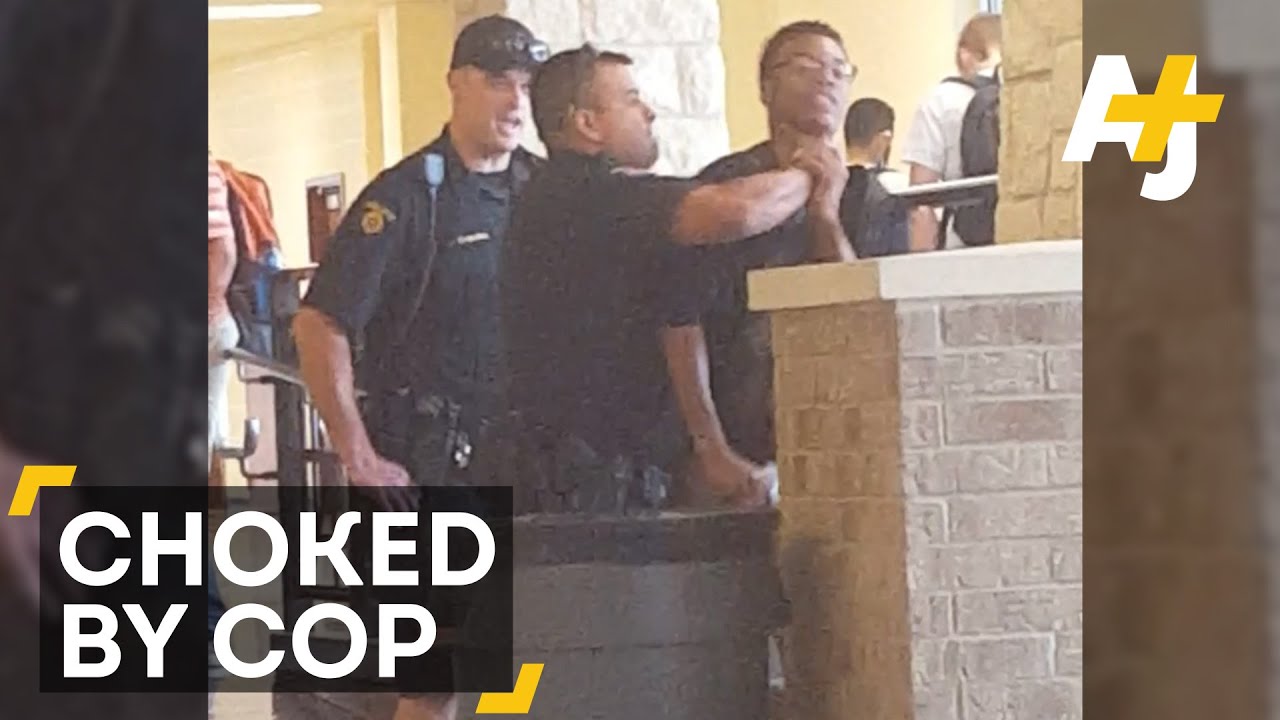 The officer has since been suspended.
The officer has since been suspended.The boy’s father, Kashka Hughes, told that he plans to press charges against the officer, whose name has not been released, for excessive force. The police officer “should have been trained well enough to know that this is a 130-pound child,” Hughes said. “The action that was taken was totally unnecessary.”
The ACLU filed a federal lawsuit this summer against the Kentucky sheriff’s deputy and his department for handcuffing the two disabled children who were acting out at school, including the 8-year-old boy with attention deficit hyperactive disorder and post-traumatic stress disorder.
In August 2014, Kenton County Sheriff’s Deputy Kevin Sumner placed a plaintiff, a 9-year-old girl identified as L.G., also with ADHD, in the back of his cruiser because she was screaming and disrupting class, according to the ACLU complaint. Sumner and the girl waited in the cruiser outside the girl’s house for more than an hour until her mother got home from work. In October 2014, the girl had a second run-in with Sumner. The officer handcuffed her around the biceps because she “was attempting to injure the school staff,” Sumner wrote in an incident report.
The boy, a third-grader also enrolled in the third grade at Latonia Elementary School and identified only as S.R., was sent to the vice principal’s office in November 2014, because he refused to listen to his teacher. While there, S.R. tried to leave the room, claiming he needed to use the restroom; the principal and a special education teacher restrained him and restricted him from leaving, according to the ACLU complaint.
When Sumner was called to the scene, a school official captured a cellphone video of his interactions with the child. The video soon went viral online.
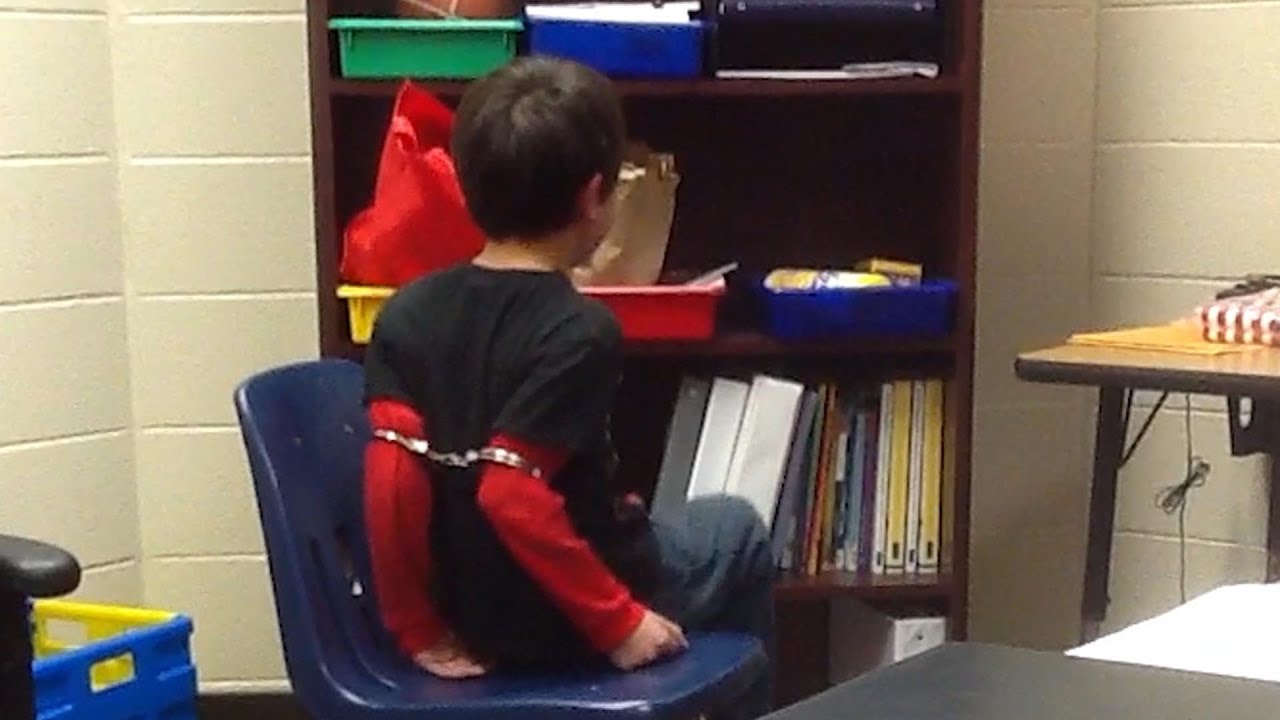
In it, the boy is seen crying and squirming in the chair as the officer demands compliance — handcuffing him above the elbows because the cuffs were too large for his wrists. “It’s your decision to behave this way,” the officer is heard saying as the boy complains of pain. “If you want the handcuffs off, you’re going to have to behave and ask me nicely.”
Despite a restricting the use of restraint and seclusion in schools, the sheriff’s office failed to create or maintain policies, practices, or training on the use of physical restraints on elementary schoolchildren, the ACLU complaint alleges.
The complaint argues that Sumner’s desire for compliance motivated his use of the handcuffs, not any imminent danger of physical harm as spelled out in the policy.
“That cuffing technique alone, we would never teach that,” said Andre Hill, a California police lieutenant who specializes in training cops in schools. “I’ve never heard of that.”
On Oct. 9, the Justice Department issued a in the case, highlighting the need for SROs to be properly trained “to recognize and respond appropriately to youth behavior that may be a manifestation of disability.”
“Appropriate training can help law enforcement agencies avoid interactions that violate children’s rights under federal civil rights laws, including the ADA (Americans with Disabilities Act),” according to the statement.
A motion to dismiss the case, which was filed with the court on Sept. 9, argued Sumner couldn’t have known about the students’ disabilities because such information is protected by the Family Educational Rights and Privacy Act, the federal student privacy law. Assistant Kenton County Attorney Chris Nordloh, who represents the police department and the SRO, declined to comment on the pending litigation.
Three levels of training could have helped prevent the problem from the start, Susan Mizner, disability counsel for the ACLU, argued. First, she said, school staff and officers should know the SRO’s job is to keep schools safe from a threat, not to engage in routine discipline.
“We can’t have that line blurred,” she said. “Just because they’re there doesn’t mean we use them. That’s the first level of training, and that’s probably the hardest piece of training for both school staff and school resource officers.”
But when an officer does become involved, Mizner said, training in de-escalation techniques is the second step. That includes diversion, not direct commands for compliance. And third: training to help recognize students with disabilities.
“School resource officers should understand and expect that they will be called in, primarily, to interact with kids with disabilities because our school systems really haven’t learned how to accommodate those disabilities and to work productively with most of these kids,” she said, adding that in order to hold authorities accountable for this level of training, it should be required.
“There should be laws that they have, at a minimum, those three types of trainings and policies that go with them,” she said. “Many more kids are hurt and traumatized by this than caught in fires in schools each year, so I see it as essential.”
Growth of school cops
Since at least the 1950s, educators across the country have relied on sworn police officers to help keep kids safe in school, but their prevalence really kicked off in the 1990s when “zero-tolerance,” tough-on-crime policies became mainstream.
Hundreds of millions of federal dollars have been spent to ramp up that police presence, particularly after a rash of school shootings. At the same time, cops in schools were also supposed to establish personal relationships with students, showing younger ones that police officers were their friends and older ones that they could be trusted with sensitive information about trouble at home or crime in school.
In the ’90s, Kristen Amundson served as chairwoman of the Fairfax County, Va., school board, where she supported the growth of resource officers in her schools. Now as executive director of the National Association of State Boards of Education, she still does.
If school police are properly trained and employ community-based policing techniques, Amundson said their presence can be a “gamechanger” in maintaining a positive school culture. The officers’ presence helped steer her schools away from criminal activity.
“We never had metal detectors at the doors, we never had to move football games from night to afternoon because it was just a culture of safety, and the SRO was there to be part of it,” she said.
Discipline problems have preoccupied educators for decades. The public policy research agency Public Agenda released a in 2004 on the “tyranny … a handful of trouble makers” can inflict on their schools, affecting other students’ learning and teacher turnover. About 75 percent of teachers surveyed said school officials often treated students with special needs too lightly, “even when their misbehavior has nothing to do with their disability.” About half said they had been accused of unfairly disciplining a student.
Public interest in school-based police surged following the 1999 shooting at Columbine High School in Colorado, and again in 2012 after the the death of 20 children and six adults at Sandy Hook Elementary School in Connecticut. Then, President Obama reacted with an executive order that paid to put a new batch of resource officers and counselors in schools.
As the use of police in schools has increased, so has the number of students arrested in school, according to an August for the National Association of State Boards of Education. And those arrests are not necessarily resulting from the cops responding to violent criminal activity but in-house disciplinary incidents.
“Where there is muddier ground that people are concerned with, and part of it involves training, is when SROs get involved in internal school discipline matters, ” said David Osher, an American Institutes for Research vice president who co-authored the NASBE report on ways state lawmakers can work to advance school discipline reform.
Federal justice and education officials have recommended school-based officers , including on implicit bias and cultural competence, and offer grants to current and future SROs. On several occasions, Congress has heard testimony over the need for consistent SRO training guidelines.
A hodgepodge of SRO training
Little data has been collected on the level of training officers receive. Only 12 states have laws that specify training requirements for officers deployed to classrooms. Those laws are inconsistent: Some states mandate training on how to respond to an active shooter. Fewer focus on dealing with children differently than adults.
“All officers are getting a certain level of training that they’re required to get as police officers,” said Nina Salomon, a senior policy analyst at the Council of State Governments Justice Center. “The additional training that we’re talking about — on youth development, on working with youth, on prevention and de-escalation — hasn’t typically been received by the majority of law enforcement that work with youth inside a school building, or that are called to campus.”
New policies in Colorado are often touted as a progressive approach. A 2012 revision in the state’s education statute set minimum requirements for SROs, so the Colorado Peace Officer Standards and Training Board developed an SRO curriculum. Before then, some departments offered extensive specialized training, others relied on a 90-minute video describing some of the problems they could encounter on the job. Some departments didn’t even do that.
Survey results from a 2012 study show most police academies do not teach recruits about research on adolescent psychology and behavior.
In 37 states, police academies spent 1 percent or less of total training hours on juvenile justice issues, by Strategies for Youth, a nonprofit that provides training to law enforcement officers. And while most academies do not teach recruits how to respond to children with mental health, trauma-related and special education-related disorders, only one state — Tennessee — provides specific training for officers deployed to schools. In five states, police academies do not require any training focused specifically on juvenile justice issues.
Once on the job, about 80 percent of police officers said they receive department-level training in juvenile justice issues, according to an International Association of Chiefs of Police survey, and almost 75 percent said they receive training through state-level agencies. However, most officers said they receive fewer than 10 hours of juvenile justice interview and interrogation training over their entire careers.
Although California law does set SRO training requirements, Hill, the lieutenant who offers school-specific SRO training through Strategies for Youth, said his boss at the Richmond, California police department is progressive about training.
Before he was asked to lead the department’s youth services division, Hill said he didn’t realize the effect officers can have on kids’ lives. He does now.
“Especially in urban schools, kids are hard to reach,” he said. “If they’re not getting structure at home, they are going to continue to act out, even when confronted by an authority figure.”
Hill is in the process of developing a training model to present to other officers in his Richmond department. For him, training is important, he said, because “we don’t want to find ourselves in front of a judge being asked what kind of training is necessary.”
A Texas town listens
A high-profile case not connected to school discipline still prompted action by an advocacy group worried about student vulnerability.
In August, Texas Appleseed sent a letter to the McKinney Independent School District superintendent, calling for changes in its memorandum of understanding with the city’s police department, noting that the agreement does not require student-focused training or prior experience with students as a prerequisite for employment as a school resource officer.
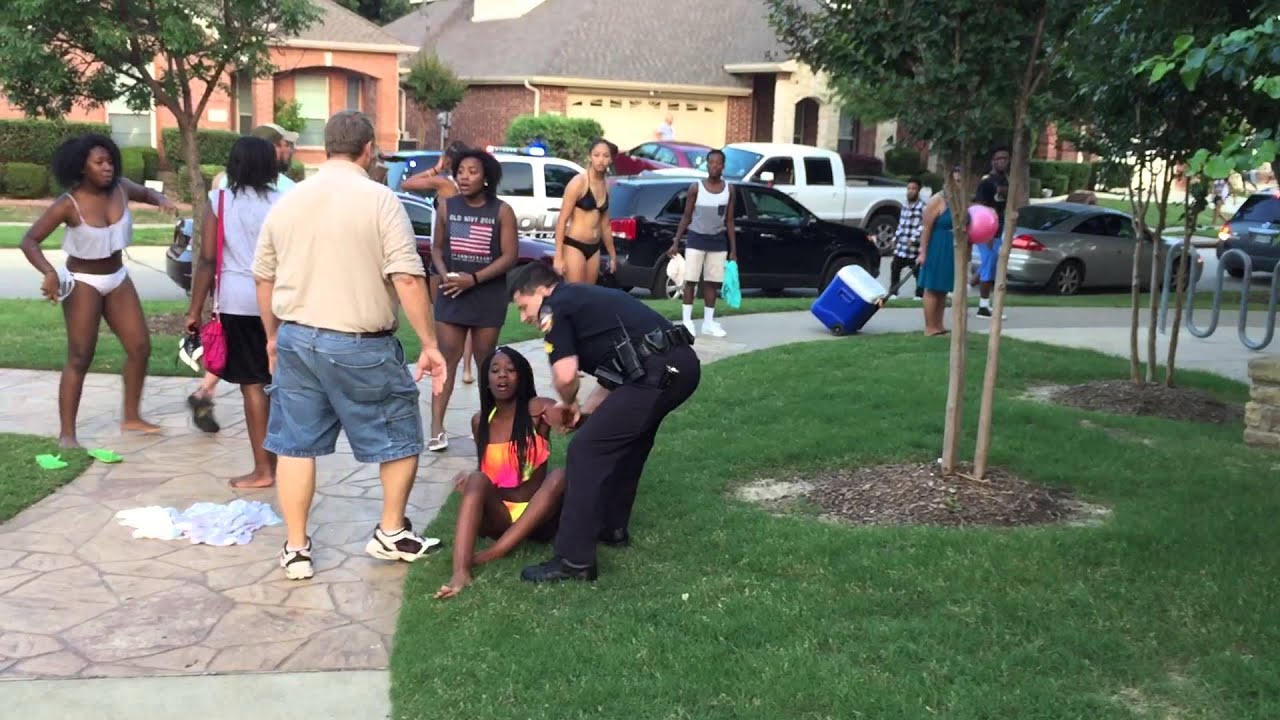
The letter was prompted by a viral cellphone video from this summer, showing a McKinney police officer pointing his gun at teenagers and shoving a young black girl to the ground. Texas Appleseed argued inadequate training policies leave students at risk of similar situations.
“In terms of dealing with students of color, one thing that is super important and one thing we asked McKinney to do is to have training that allows people to understand the unconscious biases for their behavior,” said Morgan Craven, director of the School-to-Prison Pipeline Project at Texas Appleseed. “It can be uncomfortable for people to say ‘I am biased against people with color,’ but a majority of people in this country, and a majority of teachers, have those biases.”
African-American students in the McKinney schools, while making up only 13 percent of enrollment, accounted for 39 percent of arrests by school resource officers and 36 percent of misdemeanor tickets, according to data compiled by the advocacy group from January 2012 to June 2015,
In June, Texas Gov. Greg Abbott signed a law requiring school resource officers working for school districts with more than 30,000 students to receive youth-specific training, including de-escalation techniques and child development instruction. Although the McKinney district didn’t meet the requirements, with an enrollment of about 24,500 students, Texas Appleseed asked them to comply voluntarily.
It appears the McKinney Police Department took Texas Appleseed’s concern to heart.
The department previously required SRO applicants to complete the National Association of School Resource Officers’ basic SRO certification program, to have two years of experience on the force, and to possess an intermediate Texas Commission on Law Enforcement Certification, department spokeswoman Sabrina Boston said. Maintaining consistency with the new state law, Boston said all school-based officers at the department will attend NASRO’s advance SRO certification school, coursework that exceeds the law’s requirements.
Training a matter of ‘common sense’
The Justice Center doesn’t see police stepping away from schools any time soon, Salomon said. So in 2014, the center released more than 60 policy recommendations to help ensure students are in productive classrooms, not courtrooms.
Several training requirements were recommended, starting with knowledge of the school’s code of conduct so school officials and police are on the same page. The Justice Center administered the report in coordination with the Supportive School Discipline Initiative launched in 2011 by the U.S. Attorney General and the U.S. Secretary of Education. More than 100 advisers including policymakers, school administrators, teachers, behavioral health experts, and police collaborated on the recommendations.
“We don’t take a position on whether law enforcement should be in school or not,” Salomon said. “But if they are going to be in school, as is the case in a lot of jurisdictions around the country, then they need to have the right training, resources and support to be able to do their job well.”
Most members of the National Association of School Resource Officers, which does not cover every cop who works in a school, receive at least some training beyond what is required by police academies or school orientation, according to a Justice Center survey. Training covers a variety of scenarios, including investigation protocols, active shooters, conflict resolution, addressing trauma, and working with school administrators. Some said they were trained on bullying and suicide prevention.
Canady, the NASRO executive director, gets frustrated when people say there isn’t any training available for school-based police officers. His organization has trained school resource officers for more than two decades — but “we only train the ones that come to us.”
NASRO, the largest provider of school-based training, instructs about 1,500 officers each year, Canady said.
His program teaches officers concepts in law enforcement, and in teaching and informal counseling.
“The SROs should become as if they’re a member of the school team, and certainly another trusted adult in the building that certainly is there to protect students, but certainly also to be aware of any criminal issues going on in the schools,” Canady said. “They serve a lot of different roles, especially if they’re doing the job the proper way.”
However, since school-based police are usually recruited from law enforcement, according to, even officers trained by NASRO typically have years of law enforcement training and only three days of training in counseling and education.
With Strategies for Youth, officers are taught about the brain structure and capacity of youth during their adolescence and young adulthood — information that promotes positive interactions and lessens conflict.
Thurau, the organization’s executive director, said some officers do resist specific training about child behavior, but others take an active approach to their training. Her program teaches officers in their techniques, who then teach their peers.
Los Angeles Police Department Detective Richard Askew said his time as an educator and as an SRO influenced his understanding of the way children behave and interact with authority.
Before joining the LAPD, Askew worked for two years at a charter school serving at-risk students aged 16-24 who were unable to stay engaged with traditional or alternative methods. Joining LAPD’s juvenile narcotics division, Askew was planted in L.A. schools as an undercover investigator.
In 2009, Askew joined LAPD’s mental evaluation unit, a partnership with the department of mental health to interact with people who struggle from mental health issues. He also became a Strategies for Youth trainer.
“SROs generally have a pretty big impact on campuses for students because of their authority positions and how they’re perceived,” Askew said.
Once an officer is selected as an SRO, they receive in-house training on school district policies and procedures and 40 hours of SRO training from the state police academy, he said. Just a few months ago, all of the department’s officers were taught how to avoid implicit bias.
California does have a law setting training requirements for SROs. But until standardized training is required, most of the officers who do seek additional coursework are acting out of common sense, Canady said. Police departments would ensure officers in investigations units are properly trained. So why not those who work in schools?
“Officers working in schools, just out of the nature of the assignment, are going to become the most well-known police officers or sheriff’s deputies in your community, and you’d better have some additional training for them, and you’d better make sure it’s the right person,” Canady said, “or you’re going to wind up potentially giving your department a black eye.”
Correction: An earlier version of this story said that Virginia was among the states with laws requiring special training for officers deployed to classrooms. However, while district-hired school security officers in Virginia are required to receive student-specific training, the state does not require any such training for school resource officers, who are sworn police officers.
Did you use this article in your work?
We’d love to hear how The 74’s reporting is helping educators, researchers, and policymakers.
