Could an AI-Driven ‘Job Apocalypse’ Push the Best and Brightest into Teaching?
Petrilli: Recessions nudge smart college grads toward reliable, safe careers in education. Artificial intelligence disruptions could do the same.

;)
Education news and commentary, delivered right to your inbox.
Sign up for The 74 newsletter.
Get stories like this delivered straight to your inbox. Sign up for The 74 Newsletter
Nobody knows for sure whether artificial intelligence will leave millions of Americans without work, but there are already signs that the 鈥淎I job apocalypse,鈥� as the , may already have arrived, .
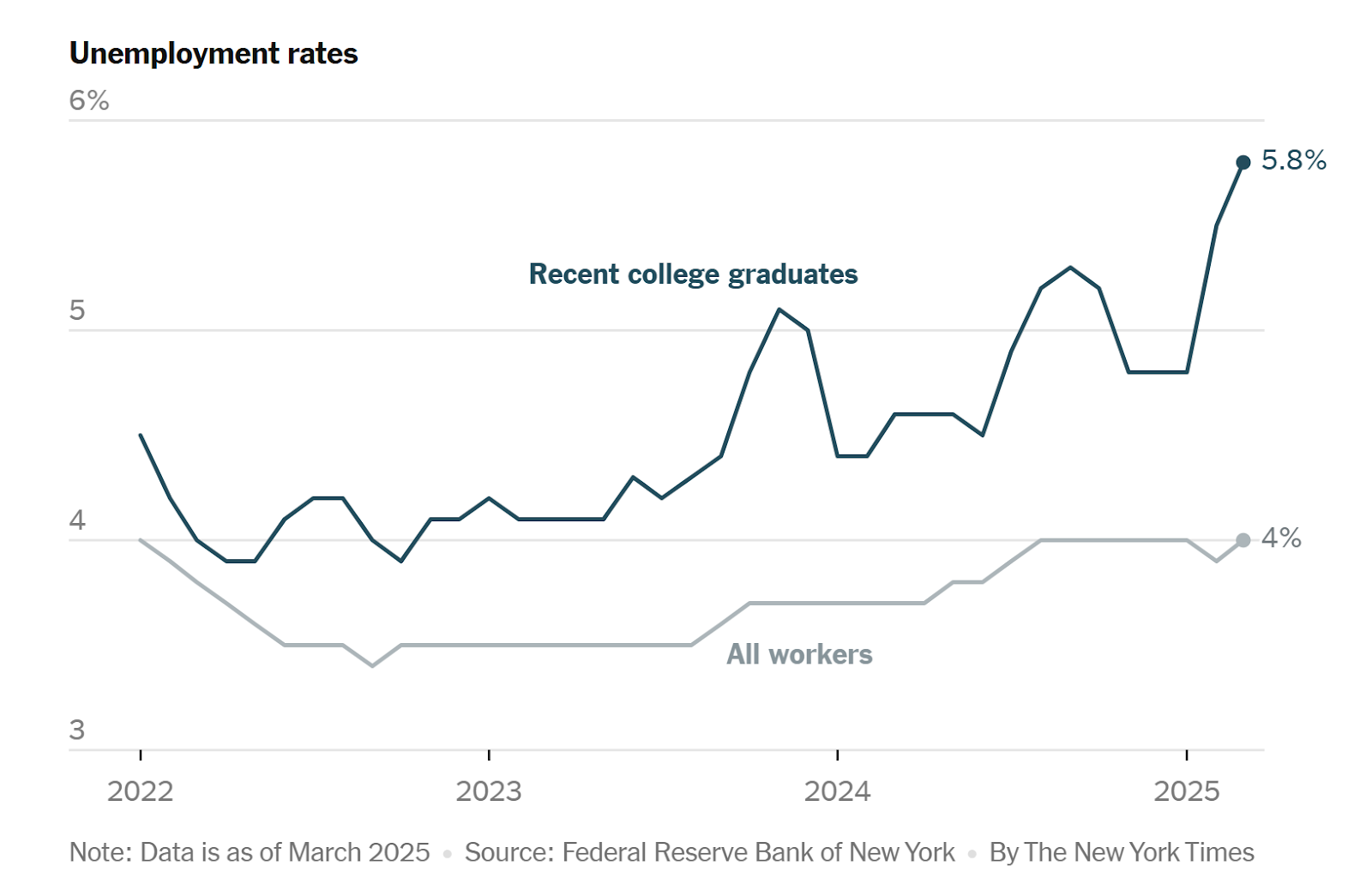
If this is the beginning of a trend, and not just a blip, it has huge implications for the education sector, as it raises questions about the kinds of jobs students are being prepared to do.
But even if this phenomenon proves short-lived 鈥� for example, if AI-driven innovation soon creates new, good-paying jobs for 22-year-olds 鈥� it presents those of us in K-12 education with a golden and very timely opportunity.
No, it鈥檚 not to replace teachers with AI. For most K-12 students, human interaction is likely to be as important as ever to helping them learn.
But what it may help us do 鈥� at least, create the opportunity for us to do 鈥� is recruit more of the most talented college graduates into teaching. Graduates who currently find themselves with fewer job opportunities.
That鈥檚 not pure conjecture. A in the prestigious Journal of Labor Economics found that teachers who entered the profession during recessions were unusually effective at boosting student achievement, especially in math. Back in 2019, co-author Marty West of Harvard told The 74 that the number of excellent teachers is 鈥渟trongly influenced by how attractive teaching is relative to other jobs鈥�:
When recessions wreak havoc on the private sector, the profession becomes a safe harbor for talented professionals 鈥� but as the economic picture brightens, promising candidates look elsewhere, and incumbent educators begin organizing for a better deal.
The country may or may not be heading into a tariff-related recession, but a down labor market for college graduates should provide much the same effect as far as turning the teaching profession into a safe harbor for young people who can’t land jobs elsewhere.
No doubt, not all smart college graduates will be great teachers. But the lesson from other tough labor markets is that the bigger the pool of prospective teachers, the higher the quality of those who end up in classrooms.
Schools, districts and states might benefit from this AI-driven surge in teacher recruitment without lifting a finger. But if they wanted to supercharge the dynamic and eliminate teacher shortages altogether, there are specific actions they could take. And the sooner the better. Most importantly, they should raise the pay for new teachers. That鈥檚 do-able 鈥� but as Chad Aldeman argued recently, it can happen only if administrators start prioritizing teacher quality over teacher quantity 鈥� and increasing educators’ salaries over hiring all manner of non-teaching staff. That鈥檚 certainly not what schools have been doing in recent decades.
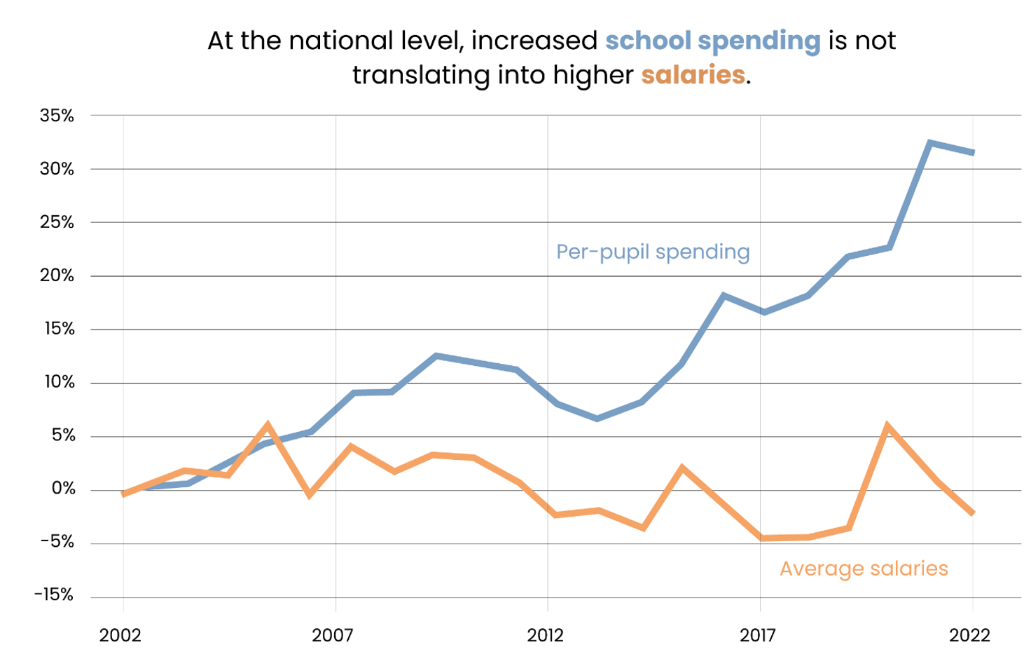
As student enrollment declines nationally and in many locations, schools also need to reduce the on their payrolls. Moving to thinner staffs and modestly larger class sizes would free up even more resources that could be plowed into higher salaries. As Eric Hanushek and Macke Raymond , such efforts have made a huge difference for students in Washington, D.C., and Dallas, especially when targeted at the best teachers in the neediest schools.
And while AI shouldn鈥檛 replace teachers, it might make them more efficient and effective 鈥� so much so that schools could do without quite as many teacher aides, administrative staffers and the rest of the army of people who now make up the .
There鈥檚 little doubt that AI is causing uncertainty, and probably disruption, in the labor market. That鈥檚 not great for young college graduates facing a foggy future. But it can be great for America’s K-12 students, if administrators and policymakers act fast.
Did you use this article in your work?
We鈥檇 love to hear how The 74鈥檚 reporting is helping educators, researchers, and policymakers.
Michael J. Petrilli is president of the Thomas B. Fordham Institute, a visiting fellow at Stanford University's Hoover Institution and an executive editor of Education Next.
